Daniel Joppert
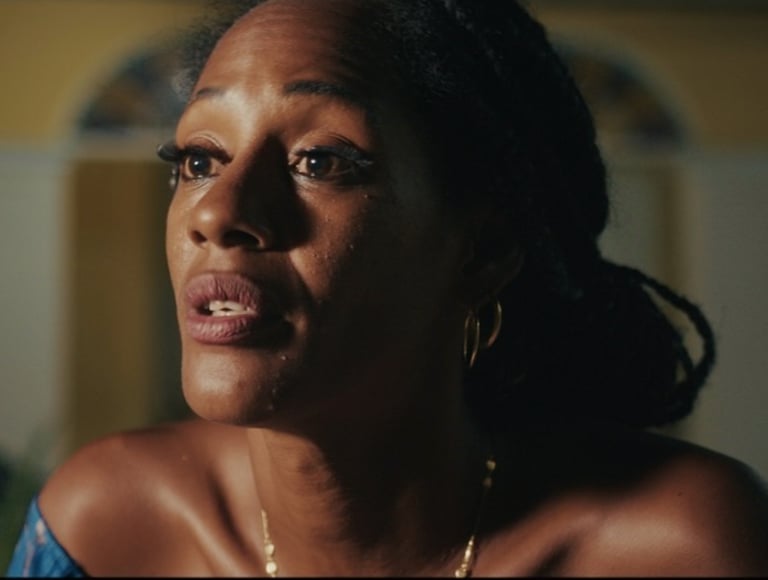
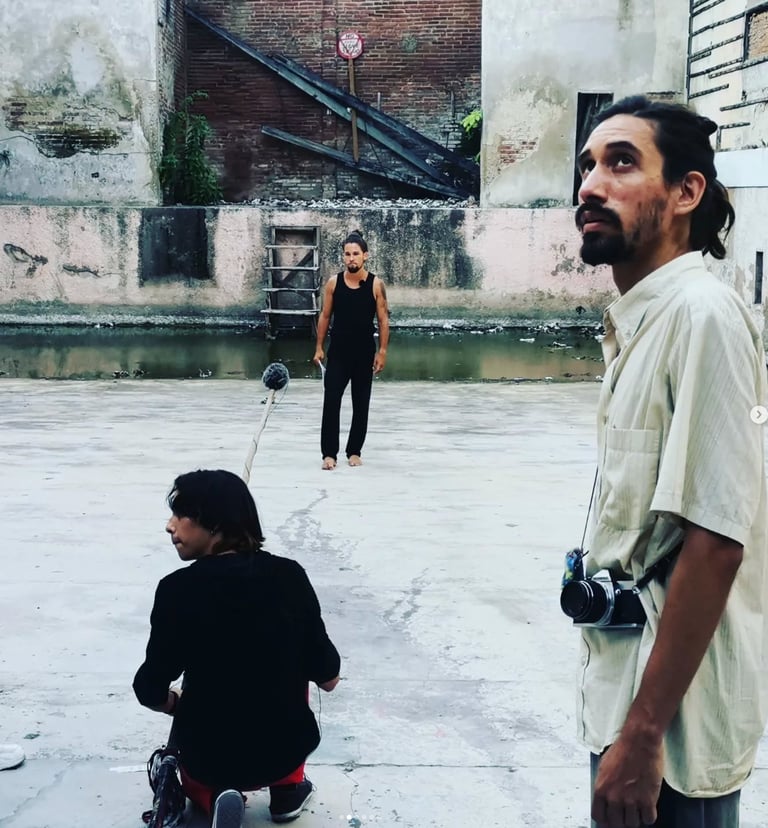
La Traverse Grand Paris Artistic and Creative Residency Laboratory is a one-hundred-day workshop dedicated to learning, technical refinement, and artistic development. It fosters opportunities for experimentation, creation, research, and networking in the fields of art, ecology, and science.
The training process will culminate in a book composed of analog photographs, field writings, oral archives, and works of fiction and non-fiction. This publication will be conceived and developed as a multimedia presentation under the direction of La Traverse’s cultural and artistic team, led by Dr. Diana Ruiz Pino.
The project is part of a broader process of Cultural Research and Documentation that seeks to promote social and climate justice, as well as decolonial and antiracist processes, through the construction—within a book and a multimedia platform—of insurgent imaginaries grounded in scientific knowledge, territorial experience, an ecosystemic perspective, and a historical coherence rooted in the sociobiodiversity of the Global South.
In the Americas, a sophisticated intelligence has existed for millennia, deeply attuned to natural cycles. These lands gave rise to profoundly interconnected peoples who developed ways of life based on self-sufficiency and were organized in multicentric forms across their territories. Beyond this, their technology—organic and integrated—has always been grounded in the biosphere. These peoples already understood the harmful geological and spiritual consequences of excavating the earth in search of rocks and metals, penetrating the lithosphere; therefore, they did not do so. It was these peoples who created a canoe route extending from the Napo River in Misahuallí, Ecuador, to southeastern Cuba. This route is described by Antonio Núñez Jiménez in the book From the Amazon to the Caribbean by Canoe, prefaced by Gabriel García Márquez. The work takes the form of a travel diary, accompanying the author as he retraces this route in the context of the 500th anniversary of the encounter between two worlds (when Europeans crossed the Atlantic).
Through this book, the naturalist Antonio Núñez Jiménez sought to present the profound culture existing in these lands, with its broad reach and high degree of integration. He portrays their ways of doing things as culturally chosen, scientifically grounded practices that generated collective abundance and were transmitted from generation to generation over thousands of years.
A creative residency for artists and thinkers.
Contact
+33 07 81 00 03 82
© 2025. All rights reserved.





4 Bd Vercingétorix, 95100 Argenteuil